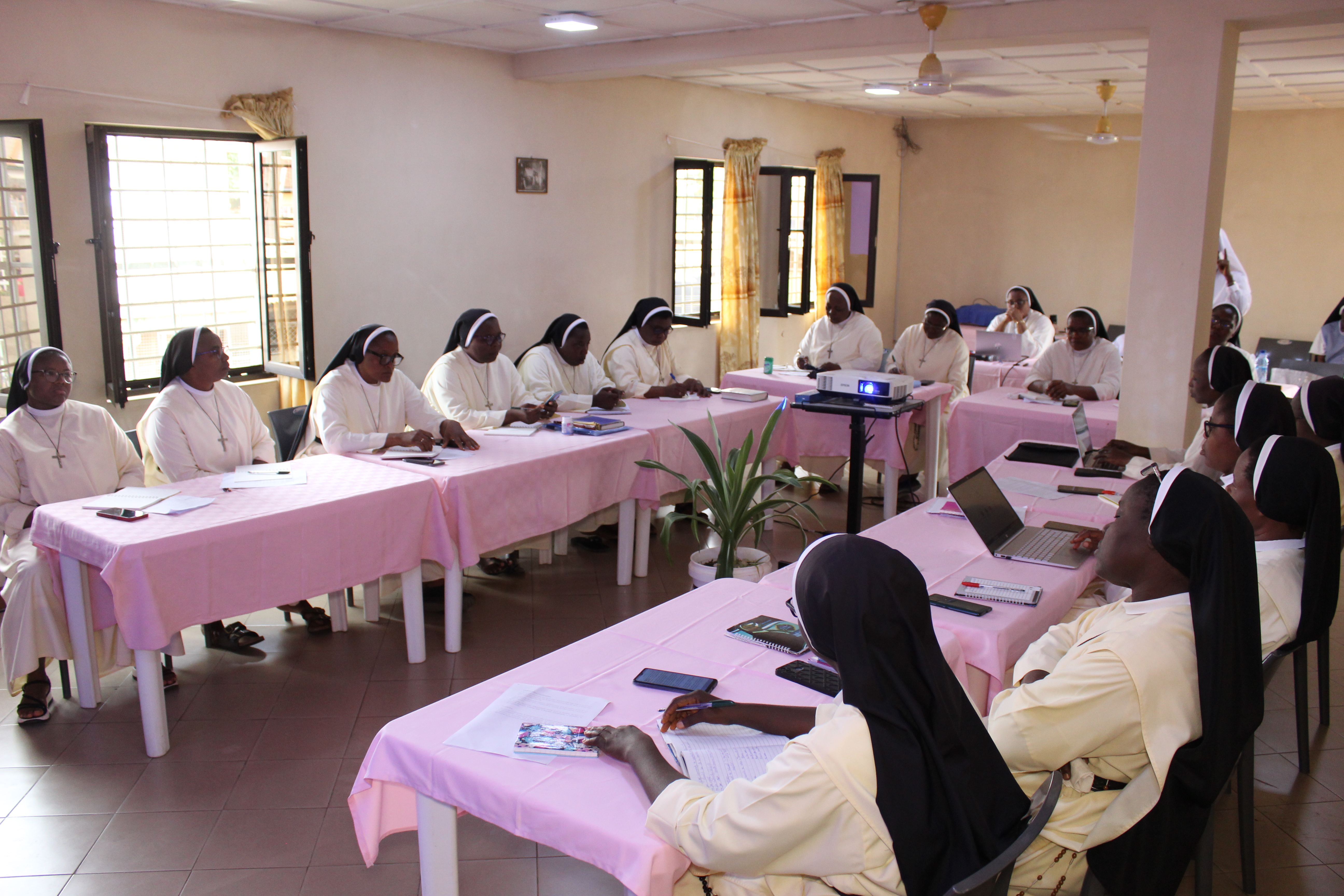
Who are the Dominicans?
The Order of Preachers (Latin: Ordo Praedicatorum, postnominal abbreviation OP), also known as the Dominican Order, is a mendicant Catholic religious order founded by the Spanish priest Dominic of Caleruega (also called Dominic de Guzmán) in France, approved by Pope Innocent III via the Papal bull Religiosam vitam on 22 December 1216. Members of the order, who are referred to as Dominicans, generally carry the letters OP after their names, standing for Ordinis Praedicatorum, meaning of the Order of Preachers. Membership in the order includes friars, nuns, active sisters, and affiliated lay or secular Dominicans (formerly known as tertiaries, though recently there has been a growing number of associates who are unrelated to the tertiaries).
Founded to preach the Gospel and to oppose heresy, the teaching activity of the order and its scholastic organisation placed the Preachers in the forefront of the intellectual life of the Middle Ages. The order is famed for its intellectual tradition, having produced many leading theologians and philosophers.
Sisters
Women have been part of the Dominican Order since the beginning, but distinct active congregations of Dominican sisters in their current form are largely a product of the nineteenth century and afterwards. They draw their origins both from the Dominican nuns and the communities of women tertiaries (lay women) who lived in their own homes and gathered regularly to pray and study: the most famous of these was the Mantellate attached to Saint Dominic's church in Siena, to which Saint Catherine of Siena belonged.
In the seventeenth century, some European Dominican monasteries (e.g. St Ursula's, Augsburg) temporarily became no longer enclosed, so they could engage in teaching or nursing or other work in response to pressing local need. Any daughter houses they founded, however, became independent. But in the nineteenth century, in response to increasing missionary fervor, monasteries were asked to send groups of women to found schools and medical clinics around the world. Large numbers of Catholic women traveled to Africa, the Americas, and the East to teach and support new communities of Catholics there, both settlers and converts.
Owing to the large distances involved, these groups needed to be self-governing, and they frequently planted new self-governing congregations in neighboring mission areas in order to respond more effectively to the perceived pastoral needs. Following on from this period of growth in the nineteenth century, and another great period of growth in those joining these congregations in the 1950s, there are currently about 24,600 Sisters belonging to 150 Dominican Religious Congregations present in 109 countries affiliated to Dominican Sisters International.
As well as the friars, Dominican sisters live their lives supported by four common values, often referred to as the Four Pillars of Dominican Life, they are: community life, common prayer, study and service. Saint Dominic called this fourfold pattern of life the "holy preaching".
The Dominican Sisters of St Catherine of Siena Delegation of Nigeria, Our Lady Seat of Wisdom, is made up of 7 communities and 51 sisters. The Delegation was constituted on the 9th of January 2006 during the extraordinary general chapter held at Albi, France.